


Best overall: a smooth Italian calfskin bifold from the middle of the price range. Best for a first luxury purchase: a house-label small leather piece at the entry tier. Best for collectors: an exotic-skin wallet in alligator or crocodile. That is the order in which mens designer wallets climb in price in 2026, and every step up buys something specific rather than a larger logo. Dellamoda sells Italian and European leather goods, so this ranking follows material and construction and shows where your money goes.
- Mens designer wallets climb through four tiers: house-label entry, smooth calfskin, hand-finished Italian leather, exotic skin.
- A smooth Italian calfskin bifold is the best overall pick for 2026. Buy it for daily carry.
- Skip logo-heavy coated canvas if you want leather that ages. It will not develop patina.
- Exotic skin suits collectors and gifting. Hold off until you know which wallet format you actually carry.
- Tier boundaries shift, so check live pricing on the product page before you decide.
Why price order tells you more than a brand list
The search for mens designer wallets draws roughly 27,100 queries a month, and most results hand you a flat list of famous names. A flat list hides the thing you are really deciding: what the extra spend pays for. A wallet that costs twice as much is not twice as good. It is usually made from a different grade of leather, finished by hand, or carries a bigger brand premium.
This guide sorts wallets into four tiers by how they are made, from the most accessible to the most rarefied. For dollar ranges, how much a designer men's wallet costs works through the numbers. Here the question is narrower: which tier is right for you in 2026, and which one is wasted money.
What separates a good designer wallet from an expensive one
Six criteria decide the ranking. Check them before you look at any price tag.
- Leather grade and cut. Full-grain or smooth calfskin ages. Heavily coated or corrected leather does not.
- Edge finish. Painted, burnished or folded edges that are even and sealed last longer than raw, fraying ones.
- Stitching. Tight, even, saddle-style stitching at stress points: the fold, the card slots, the corners.
- Interior. Lining that matches the outside in quality, and card slots that are not so tight they crack the leather.
- Format. Bifold, trifold, card holder or zip. The wrong format is the most common reason a good wallet gets abandoned.
- Brand premium. The share of the price that is name rather than material. It is real, and it is worth knowing when you pay it.
Men's designer wallets at a glance
| Tier | Best for | Standout feature | Key limitation |
|---|---|---|---|
| 1. Entry house-label | First luxury purchase | Recognizable name, simple construction | Coated or treated surfaces age less gracefully |
| 2. Smooth calfskin | Daily carry | Leather that softens and darkens | Plainer look, little to show off |
| 3. Hand-finished Italian leather | Considered gifting, long-term owners | Edge work, stitching, better interiors | Higher cost for details a stranger will not notice |
| 4. Exotic skin | Collectors, special occasions | Natural scale pattern, rarity | Needs gentler handling and care |
The tiers are not a quality ladder in every respect. Tier two often outlasts tier one in a back pocket, and tier four is a pleasure object rather than a workhorse. Price rises with rarity and labor, not always with durability.
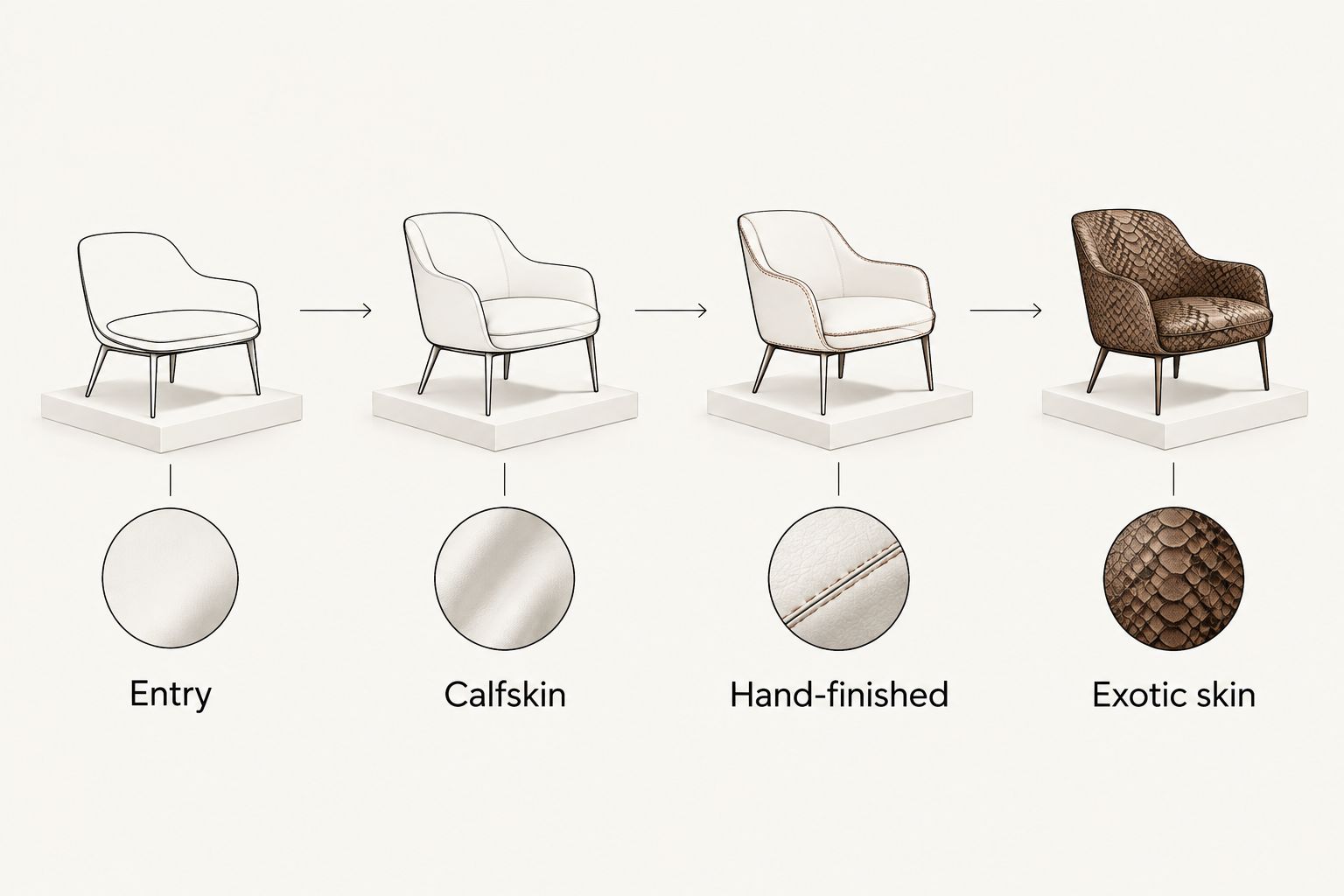
1. Entry house-label: best men's designer wallet for a first luxury purchase
This is the way into a designer name. Expect a compact bifold or card holder with the house's signature mark, often in a treated or coated leather. It does the job and it gets you a recognizable brand in your pocket.
Entry tier pros:
- The most approachable way to own a designer name.
- Compact formats suit light carry.
- Easy to gift.
Entry tier cons:
- Coated surfaces can scuff or peel before they soften.
- The brand mark is doing much of the work.
Best for: a first designer piece, or a man who changes wallets often.
Verdict: Hold. Buy it if the name matters to you. If leather quality matters more, go one tier up.
2. Smooth calfskin: best mens designer wallet for daily carry
This is the sweet spot. A bifold in smooth Italian calfskin, plain on the outside and properly lined inside, gives you leather that softens, darkens and takes on your own wear. There is little hardware and no pattern to date it. A wallet like this looks better at two years than at two weeks.
Smooth calfskin pros:
- Ages into something personal rather than worn-out.
- Restrained enough for a suit or a weekend.
- Edge finish and stitching are usually solid at this level.
Smooth calfskin cons:
- Plain by design, so it will not read as designer from across a room.
- Light colors show dye transfer from dark denim.
Best for: the man who carries the same wallet every day and wants it to improve.
Verdict: Buy. This is the best overall tier for 2026. To narrow your options, Italian leather wallets for men breaks down what to look for.
3. Hand-finished Italian leather: best for long-term owners and gifting
Here the money goes into details you notice only up close: painted or burnished edges, neater stitching, a lining that matches the exterior, and card slots cut to fit. Houses with a saddlery heritage often put visible stitching on the edges of their small leather goods, and it is a fair signal of where the labor went.
Hand-finished pros:
- Better interiors and cleaner edge work.
- Better suited to being repaired or kept for years.
- A gift that looks as considered as it is.
Hand-finished cons:
- Much of the added cost is invisible to anyone but you.
- A bifold this refined deserves a jacket pocket, not a back pocket.
Best for: a milestone gift, or someone who already knows which format suits him.
Verdict: Buy if you are certain of the format. Otherwise Hold and start at tier two.
4. Exotic skin: best for collectors and special occasions
Alligator, crocodile and ostrich leather add something no calfskin can: a natural scale or quill pattern that differs from skin to skin. Dellamoda works with exotic skins across its men's shoes and belts, and a wallet in the same material is the natural companion to them. It is also the most expensive tier, and the one that asks the most of you.
Exotic skin pros:
- Distinctive texture that no printed leather imitates.
- Pairs with exotic shoes or a matching belt for a considered set.
- A strong statement gift.
Exotic skin cons:
- Needs gentler handling, and it dislikes prolonged moisture.
- Overkill if your wallet lives in a gym bag.
Best for: collectors, wedding and black-tie wardrobes, and anyone building a matched set.
Verdict: Hold until you know your format, then Buy without hesitation. If you are matching a wallet to footwear, how to pick a designer wallet color to match your shoes is the place to start.
Format comes before tier
Most regret comes from picking the wrong shape, not the wrong tier. A bifold is the standard. A card holder suits a man who carries a phone, a few cards and little else. A zip wallet suits travel and cash, and it adds bulk. Decide the format first, then spend.
Smooth, unlined leather is also the easiest way to test a house before you commit. Tan and camel show wear sooner than black, which is why camel leather card holders are a low-risk way to see how a maker's leather ages before you buy a full bifold. If the card holder softens well, the larger piece will too.
How the tiers were ranked
The ranking follows the six criteria above, weighted toward leather grade, edge finish and interior quality rather than brand recognition. A wallet moves up a tier only when the material or the finishing changes. Price is the sorting axis because that is how you searched, but it is not the verdict. Check each wallet's live product page for the current figure, since prices move.
“Pay for leather and finishing before you pay for a logo.”
Which men's designer wallet should you choose in 2026?
If you want one answer, choose a smooth Italian calfskin bifold from tier two. It is the best balance of leather, longevity and restraint, and it improves with use.
Pick tier one if a recognizable name matters most and you want a light, inexpensive entry. Pick tier three for a gift that rewards close inspection. Pick tier four if you collect, or if you are matching the wallet to exotic shoes or a belt. In every case, confirm the format first.
FAQ
What is the best men's designer wallet for daily carry?
A smooth Italian calfskin bifold is the best daily carry. It softens and darkens with use, and the plain exterior works with any outfit.
Are expensive designer wallets worth it?
They are worth it when the extra cost buys better leather, cleaner edges and a stronger interior. They are not worth it when most of the price is the brand mark.
Is an exotic-skin wallet practical?
It is practical if you handle it gently and keep it out of prolonged moisture. It suits occasional or matched-set use better than rough daily carry.
Should I buy a bifold or a card holder?
Buy a bifold if you carry cash, receipts and several cards. Buy a card holder if you carry little and want a slim pocket line.
How do I tell good leather from coated leather?
Good leather shows natural grain and softens with handling. Coated leather has a uniform, plastic-like surface that tends to crack or peel rather than age.
Should my wallet match my shoes and belt?
It does not need to match exactly. A wallet in the same color family and a similar leather finish keeps the look coordinated.
One last thing
Open the wallet before you judge it. The inside tells you more about a maker than the outside does: the lining, the way the card slots are cut, the neatness of the stitching at the fold. A wallet that is well made inside is almost always well made throughout.