


For all-day comfort, choose eyeglass frame material by how the finished frame sits on your nose, temples, and ears, not by the material name alone. Titanium is a useful starting point when low weight matters; acetate suits shoppers who want expressive color and a more substantial silhouette. Neither compensates for the wrong bridge or width, so your shortlist should begin with fit and include the weight of your prescription lenses.
How do you choose eyeglass frame material for all-day comfort?
Choose the material that supports your fit requirements, then judge the complete frame rather than the label. A fine metal frame with poorly positioned nose pads can feel less comfortable than a well-balanced acetate frame. Likewise, an attractive acetate front is the wrong choice if its bridge slips whenever you look down.
Start with the discomfort you want to avoid. Pressure at the nose, squeezing at the temples, and soreness behind the ears point to different fitting questions. If your current glasses already feel too wide or too narrow, review how to choose the right eyeglass frame size for a small face before treating material as the solution.
| Material | Useful for | Comfort advantage | Limitation to check |
|---|---|---|---|
| Titanium | Wearers prioritizing low frame weight | Low density allows lightweight frame construction | Alloy composition, pads, hinges, and temple tips still need checking |
| Cellulose acetate | Wearers who enjoy expressive color and a defined silhouette | Can provide broad, smooth contact at a well-fitting bridge | A substantial front adds weight; many designs have a fixed bridge |
| Stainless steel | Wearers seeking a slender metal profile | Strength allows fine frame sections | Finished weight and nickel content depend on the construction and alloy |
| Nylon-based materials | Wearers seeking lightweight, flexible designs | Some formulations combine low weight with flexibility | Adjustment and repair options vary by formulation and design |
These are starting points, not a ranking. Material properties explain part of the wearing experience; bridge shape, frame dimensions, and lens choice explain the rest.
Why this matters: comfort is a question of balance
Glasses rest on a small set of contact areas. A frame that concentrates pressure at one spot can become distracting even when it feels light in your hand. The useful distinction is between low total weight and comfortable weight distribution.
For your purchase, separate visual presence from physical heft. A dark, sculptural frame can look substantial without requiring an oversized lens opening. A delicate metal rim can look almost invisible while carrying lenses that make the finished glasses noticeably front-heavy.
Prescription suitability belongs in the conversation before you settle on a shape. Ask your optician to assess the lens opening, your prescription, and your pupil position together. The frame and lenses are one wearing system, not separate purchases.
Titanium: useful for prioritizing low weight
Titanium's low density and corrosion resistance make it a useful eyewear material. If your complaint is that your glasses feel heavy, a well-proportioned titanium frame deserves a place on your shortlist.
Look beyond the front rim. The bridge, temples, hinge assembly, and decorative components all contribute to the finished frame, and a titanium label does not establish the composition of every part. Ask whether the description refers to pure titanium, a titanium alloy, or only selected components.
The limitation is straightforward: lightness does not correct concentrated pressure. Small nose pads, an unsuitable bridge position, or temples that grip too tightly still need attention. Titanium also requires material-appropriate adjustment; leave that work to an optician rather than bending the frame at home.
Choose titanium when weight is your priority, provided the complete frame fits without pinching or slipping. It is a particularly sensible direction if you prefer a restrained outline rather than a broad, decorative front.
Cellulose acetate: useful for color and a defined silhouette
Cellulose acetate gives eyewear designers scope for rich color, translucency, and substantial shapes. It suits the shopper who treats glasses as part of an outfit rather than something to disappear from view. A polished acetate edge can frame the eyes as deliberately as a jacket frames the shoulders.
For comfort, examine the bridge first. Many acetate designs use a fixed saddle or keyhole-style bridge, though acetate frames with adjustable pads also exist. The important question is whether the actual contact surfaces sit comfortably on your nose, not whether the bridge shape has an appealing name.
A broader front and thick temples add material. That does not automatically make a frame uncomfortable, but it makes balance more important, especially after prescription lenses are fitted. Check whether the frame stays level without relying on tight temple pressure.
Acetate can be adjusted with appropriate professional techniques. Do not heat it yourself or assume every fit problem is adjustable. Choose acetate for its expressive shape only after its bridge earns your confidence.
Stainless steel: useful for a slender metal profile
Stainless steel offers strength and corrosion resistance, allowing designers to use fine sections. It is a useful option when you like the precision of a narrow rim and want less visual emphasis around the eyes.
Its comfort advantage comes from the finished construction rather than a promise that steel is always light. A slender frame and a heavily decorated frame made from the same material are different wearing propositions. Examine the temples and bridge as closely as the rim.
Some stainless steel alloys contain nickel. If you have a known nickel allergy, do not interpret “stainless” as confirmation that the frame is suitable for your skin. Ask for the alloy and coating information, including details of components that touch your face.
Choose stainless steel for a fine metal silhouette, with fit and skin compatibility checked separately. Its neat appearance is not evidence of a particular weight or an allergy-safe composition.
Nylon-based materials: useful for lightweight flexibility
Nylon-based eyewear materials can combine low weight with flexibility. They are worth considering when you want a less rigid feel, though performance depends on the particular formulation and frame design.
Flexibility is not the same as a custom fit. A temple that bends easily can still press against the side of your head, and a flexible bridge can still sit poorly. Assess the frame at rest rather than pulling the temples apart to demonstrate how far they move.
Ask how the frame can be adjusted and repaired. Some designs offer less scope for reshaping than conventional acetate or metal frames, and repair methods are not interchangeable across materials.
Choose a nylon-based frame when its flexibility serves your everyday wear, not simply because it bends impressively. Confirm that the frame holds its position during ordinary movement.
Why comfort varies within the same material
Two acetate frames need not feel alike. Neither do two titanium frames. The material is only one part of the design, and the following details explain why a familiar label can produce an unfamiliar fit:
- Bridge contact: The bridge or pads must support the front without concentrating pressure or allowing persistent slipping.
- Temple width: Temples that spread excessively or grip the sides of your head signal a fit question, not a need to tolerate discomfort.
- Frame proportions: A broad front, thick temples, and decorative hardware change how much material the frame carries and where it sits.
- Prescription lenses: Lens material, prescription, and lens dimensions affect the weight and balance of the completed glasses.
- Adjustment options: Adjustable pads, temple construction, and material-specific fitting methods determine what an optician can change.
- Skin contact: Alloy composition, coatings, pad materials, and temple tips matter when your skin reacts to particular substances.
Do not reduce this assessment to the lightest frame on the counter. The more useful choice is the frame that carries its weight comfortably and keeps the lenses in the intended position.
How should you compare frames before choosing?
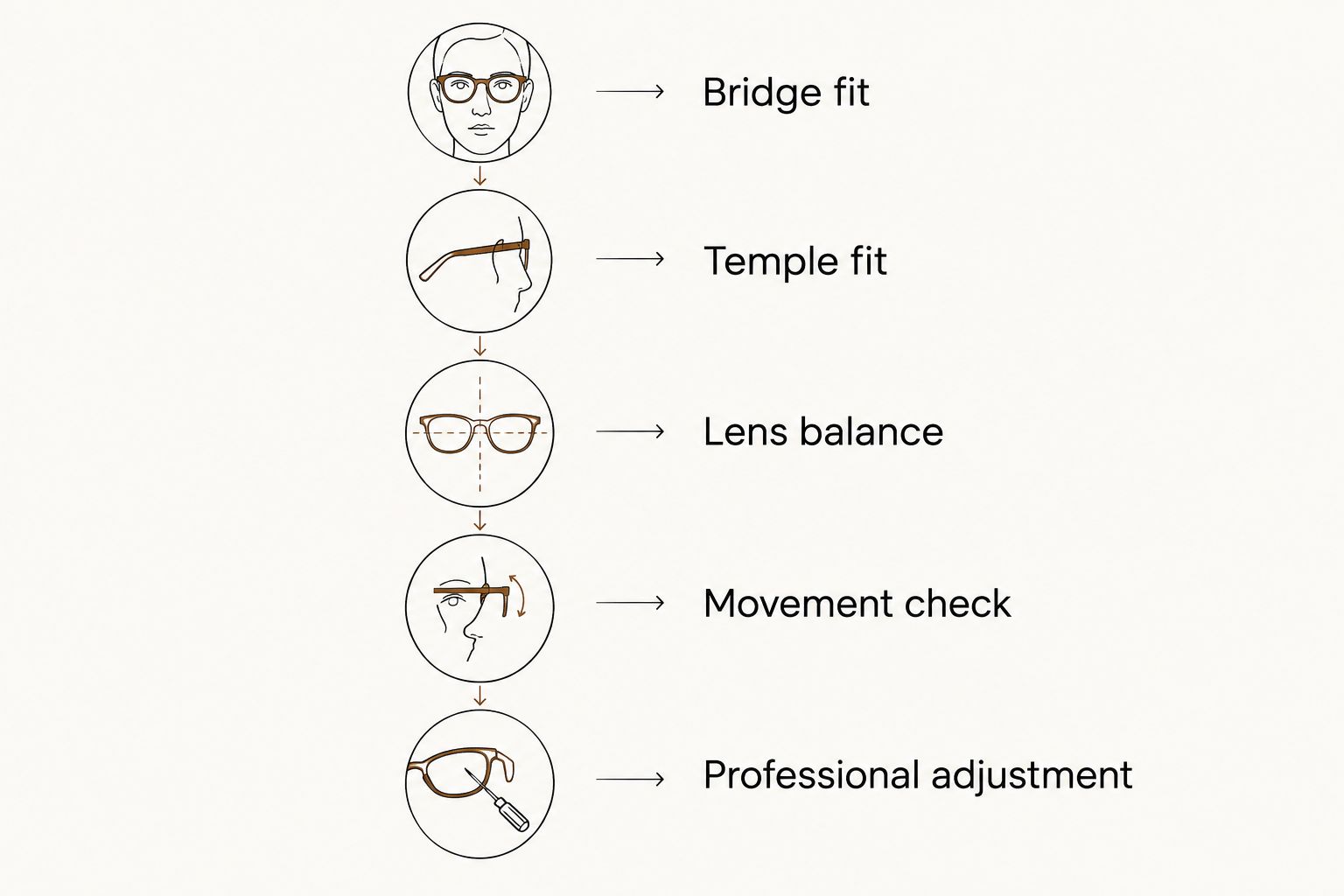
Use this fitting sequence for your shortlist. Keep the comparison focused on the same prescription requirements and similar frame proportions wherever possible; otherwise, you are comparing several variables at once.
- Bridge fit: Put the frame on without pushing it into a flattering position. Check where the bridge or pads actually touch and whether the front sits level.
- Temple fit: Notice pressure at the sides of your head and behind your ears. Ask an optician whether the width is appropriate before requesting tighter temples.
- Lens balance: Discuss your prescription before committing to a large lens opening. Ask how the finished lenses will change the feel compared with the display lenses.
- Movement check: Look down, turn your head, and smile. Watch for sliding, cheek contact, and movement that interrupts where the lenses sit.
- Professional adjustment: Have the optician assess the fit, then repeat the movement check. Distinguish a correctable adjustment from an unsuitable frame shape.
Describe discomfort precisely. “The bridge presses on the right side” gives an optician more to work with than “these feel wrong.” Take your current glasses with you so you can identify what you want to preserve as well as what you want to change.
For an online choice, ask for confirmed material and dimension information rather than interpreting a photograph. An image shows proportion and styling; it does not establish weight, alloy composition, bridge comfort, or prescription suitability.
Can a bold designer frame still feel comfortable?
Yes. A bold designer frame can be comfortable when its bridge, width, balance, and prescription suitability are right for you. Visual drama does not require accepting pressure behind the ears.
If you enjoy a pronounced brow line or sculptural acetate front, compare designs with controlled overall proportions. Let the outline provide the character rather than automatically choosing a larger lens opening. The aim is a frame that looks intentional and stays quietly in place.
Dellamoda suits shoppers seeking designer eyewear alongside Italian and European fashion. That is a style-shopping fit, not a guarantee of physical comfort: choose any individual frame by its confirmed specifications and your optician's assessment.
Is titanium always more comfortable than acetate?
No. Titanium's low density supports lightweight construction, but a well-fitting acetate frame can be more comfortable than a titanium frame with unsuitable pads or temple width.
Compare finished frames, not material reputations. If acetate rests securely without pinching and titanium concentrates pressure at the nose, the acetate frame has the better fit for you. Your face does not award points for the more technical label.
Should you change frame material if your glasses keep slipping?
Not necessarily. Persistent slipping calls for a bridge, pad, temple, and balance assessment before a material change.
Tightening the temples alone is not a complete solution if the bridge is unsuitable. Have an optician identify the cause, particularly if your glasses became unstable after a lens change or have developed an uneven fit.
FAQ
What's the best eyeglass frame material for all-day comfort?
The best eyeglass frame material is the one that supports a comfortable fit with your finished prescription lenses. Titanium is a useful starting point for low weight; acetate suits expressive silhouettes, but neither replaces a suitable bridge and width.
Are acetate glasses too heavy to wear all day?
Acetate glasses are not automatically too heavy for all-day wear. Front thickness, temple construction, frame size, lens weight, and balance determine how the finished glasses feel.
Are titanium frames safe if I have a nickel allergy?
A titanium label alone does not confirm that every frame component is suitable for a nickel allergy. Ask for the composition of the alloy, hinges, pads, and other skin-contact parts, and discuss confirmed allergies with your clinician.
Why do lightweight glasses still hurt my nose?
Lightweight glasses can hurt your nose when the bridge or pads concentrate pressure. Ask an optician to check contact, alignment, and weight distribution rather than choosing an even lighter frame immediately.
Can an optician adjust acetate eyeglass frames?
An optician can adjust many acetate frames using material-appropriate techniques. The scope depends on the design, and adjustment cannot make every unsuitable bridge or frame width fit correctly.
Do prescription lenses change how comfortable a frame feels?
Prescription lenses affect the weight and balance of the completed glasses. Discuss your prescription and frame dimensions before choosing, because display lenses do not reproduce the finished wearing experience.
What should I check when buying designer eyeglasses online?
Check confirmed frame materials, dimensions, bridge construction, and prescription suitability before choosing designer eyeglasses online. Photographs help you judge style, but they cannot confirm how a frame will fit your face.
One last thing
Before making your final choice, try the frame with the accessories you actually wear: earrings, headphones, or a hat. Contact behind the ears deserves attention too, and an otherwise comfortable temple can compete with something you wear every day.
Choose glasses you do not have to keep correcting. A frame that needs repeated pushing, lifting, or repositioning has not passed the comfort test, however beautiful its color or elegant its rim.