


A tie's width isn't a personal style flourish — it's a proportion decision that starts with your lapel. Get the two out of sync and even a beautifully cut jacket looks like it borrowed someone else's tie.
The tie width for your jacket lapel should land within roughly a quarter inch of the lapel's own measurement: a 2.5 to 3-inch narrow lapel wants a 2.25 to 2.75-inch tie, a 3 to 3.5-inch medium notch lapel wants a 2.75 to 3.25-inch tie, and a 3.5 to 4-inch peak lapel wants a 3.25 to 3.75-inch tie. The variable most people overlook is knot size — a slim four-in-hand under a wide 2026-cut peak lapel reads as an afterthought, while a full Windsor on a wide tie can crowd a narrow lapel's collar spread.
Why this matters
Lapel width sets the visual weight of your jacket's upper half. A tie that's too narrow for a wide lapel leaves an awkward gap of exposed shirt on either side of the knot; one that's too wide for a slim lapel bunches up and pushes the lapel points outward. Neither error is dramatic on its own, but side by side in a photograph or across a boardroom table, the mismatch is the first thing a well-dressed eye catches. If you're building a wardrobe around one silhouette rather than mixing eras of tailoring, matching tie width to lapel width once means you never have to think about it again — every Italian silk tie for a sharp office look you add afterward just needs to fall in the same range.
What tie width matches your jacket lapel width?
Measure your lapel at its widest point — usually about two inches below the notch or peak — then use the range below as your starting point.
| Lapel width | Tie width | Typical jacket |
|---|---|---|
| 2.5" – 3" | 2.25" – 2.75" | Slim-cut, modern notch lapel |
| 3" – 3.5" | 2.75" – 3.25" | Classic business suit, most off-the-rack jackets |
| 3.5" – 4" | 3.25" – 3.75" | Structured peak lapel, double-breasted |
Think of the tie's blade as an extension of the lapel line rather than a separate object competing with it. When the two widths agree, the eye reads the jacket and tie as one continuous shape instead of two pieces stitched together by accident.
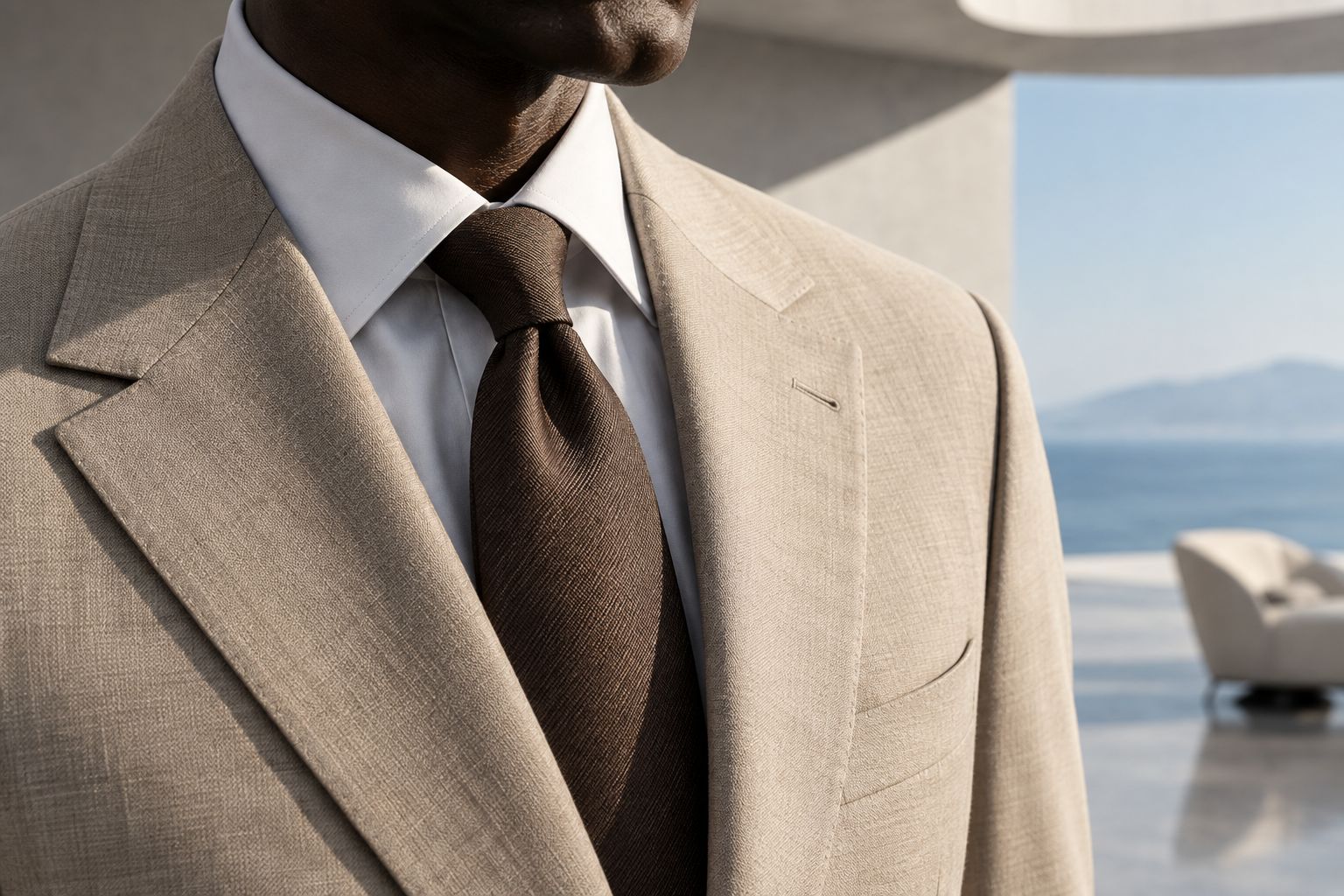
Narrow lapels: pair with a 2.25 to 2.75-inch tie
A 2.25 to 2.75-inch tie is the right scale for the slim notch lapels found on most modern trim-cut jackets. Anything wider will crowd a narrow lapel and make the collar spread look pinched. This is the width range to shop if your jacket was cut in the last decade — slim lapels have dominated ready-to-wear since the 2010s and remain the default.
Medium notch lapels: pair with a 2.75 to 3.25-inch tie
Most business suiting sold today falls into the medium notch category, and a 2.75 to 3.25-inch tie is the safest, most versatile width for it. It's wide enough to fill a standard notch lapel without looking bulky and narrow enough to still work with a slimmer cut jacket if your wardrobe spans a few silhouettes. If you own one tie width for everything, this is it.
Wide peak lapels: pair with a 3.25 to 3.75-inch tie
Peak lapels and double-breasted jackets carry more visual weight across the chest, so a 3.25 to 3.75-inch tie is what keeps the proportions balanced. A narrower tie under a wide peak lapel looks lost — like a thin stripe drawn on a wide canvas. This range is also where classic 1970s-style wide ties naturally sit, which is why vintage-inspired tailoring still calls for a fuller blade.
Why tie width varies from one wardrobe to the next
The ranges above are starting points, not rigid law. A handful of factors push the right width slightly wider or narrower for any given outfit:
- Jacket era and cut — slim 2020s tailoring runs narrower lapels than the fuller cuts of decades past, and the tie should follow suit.
- Knot style — a Windsor knot reads visually larger than a four-in-hand, so a tie a touch narrower than the top of its range can still look balanced with a bigger knot.
- Body frame and height — a taller or broader-chested wearer can carry the upper end of a width range comfortably; a smaller frame often looks better toward the lower end.
- Single vs. double-breasted — double-breasted jackets almost always have wider peak lapels, which pulls the ideal tie width up with them.
- Fabric weight — a heavier silk or wool tie fabric appears visually wider than the same measurement in a lighter weave, so lean slightly narrower with thicker fabrics.
- Personal proportion — once you've matched lapel to tie once, you'll know whether you personally prefer to sit at the top or bottom of the recommended range.
Once lapel and tie width agree, the next proportion to get right is the knot-to-collar relationship, which is where matching a tie to a designer dress shirt becomes its own small decision.


All three are cut from silk rather than a synthetic blend, which matters for width perception — silk holds a crisper blade edge than polyester, so the same stated width looks slightly more tailored once knotted. None of these will fix a lapel-width mismatch on their own; the width range you shop within still has to match your jacket first.
Should a bow tie's width match the lapel the same way?
Bow tie proportion is governed by neck size and face shape more than lapel width, so the 2.25 to 3.75-inch rule above doesn't transfer directly to bow ties. The lapel still matters for a black-tie jacket, but it's the peak lapel's satin facing width, not the bow tie itself, that needs to visually balance.
Does tie length matter as much as tie width?
Tie length matters just as much as width, but it's governed by your height and where your trouser waistband sits, not by lapel width. The standard rule is that the tip of the tie should reach the middle of your belt buckle; get the length right and a correctly widthed tie will drape properly.
What tie width is right for a slim-fit suit?
A slim-fit suit almost always has a narrow notch lapel, so a 2.25 to 2.75-inch tie is the right width for it. Anything wider will look borrowed from a bigger jacket and will crowd the narrower collar spread that slim-fit shirts are cut with.
If you're assembling a full outfit around a wide peak lapel, the same proportion logic that governs ties for groomsmen and wedding parties applies to everyday tailoring — match the width once, then build color and pattern choices on top of a silhouette that already works.
FAQ
What tie width is best for a narrow jacket lapel?
A 2.25 to 2.75-inch tie is best for a narrow jacket lapel measuring 2.5 to 3 inches. Anything wider will visually overwhelm a slim notch lapel.
How do I measure my jacket lapel width?
Measure across the lapel at its widest point, roughly two inches below the notch or peak, using a flexible tape measure. Most modern business jackets fall between 3 and 3.5 inches.
Is a 3-inch tie too wide for a slim suit?
A 3-inch tie is on the wide edge for a slim-cut suit with a narrow lapel, which typically wants a 2.25 to 2.75-inch tie. It will still work if the suit's lapel sits closer to 3 inches rather than 2.5.
What tie width works with a double-breasted jacket?
A double-breasted jacket usually carries a wide peak lapel, so a 3.25 to 3.75-inch tie is the right match. A narrower tie will look thin against the jacket's broader chest line.
Does tie width change with fashion trends?
Yes — tie width has shifted with lapel width across decades, from the wide ties of the 1970s to the slim ties that came with narrow lapels in the 2010s., medium notch lapels around 3 to 3.5 inches remain the most common cut, which keeps a 2.75 to 3.25-inch tie the safest everyday width.
Can one tie width work with every jacket in my closet?
A 2.75 to 3.25-inch tie works with most medium notch lapels and is the closest thing to a universal width if your jackets span several cuts. It won't look ideal against a very narrow slim-fit lapel or a very wide peak lapel at the extremes.
Should knot style change my tie width choice?
Knot style affects how wide a tie looks once tied, so a Windsor knot can make a slightly narrower tie appear fuller than a four-in-hand knot would. Choose the tie width for your lapel first, then pick the knot that suits the collar you're wearing.
One last thing
The detail that trips up most buyers isn't width at all — it's assuming every tie labeled "standard" is the same width. Widths vary by maker even within the medium notch range, so a tie marked 3 inches from one house and 3.25 inches from another can look different against the identical lapel. Measure your own lapel before you shop, not after the tie arrives.